01
Everyday dress selection
Begin with your week rather than a single outfit. List what your days actually hold — commutes, desks, school runs, markets, errands, evenings out — and choose dresses that work across several of them. Prioritise comfort you can forget about: a neckline that stays in place, sleeves that let you lift your arms, a skirt wide enough to climb stairs and step into an auto-rickshaw. Then consider care, because dresses that can be washed at home are worn far more often than those that need dry-cleaning. Finally, look at colour across the whole group, not piece by piece. A few base colours that work with one another, plus one or two prints, produce more combinations than a rail of unrelated favourites. The best everyday dresses are the ones you reach for without deliberating.
02
Fabric and comfort
In Mumbai, comfort starts with fabric. Humidity stays high for much of the year and the monsoon brings months of warm rain and damp air, so moisture management matters as much as temperature. Natural and plant-based fibres — cotton, linen, viscose and modal — absorb moisture and let air circulate, while open weaves such as voile, mulmul and seersucker hold cloth away from the skin. Lighter colours reflect the sun; mid-tone prints forgive splashes. In the monsoon, choose fabrics that dry quickly and avoid heavy cloth that stays wet for hours; a little polyester in a blend helps a dress dry faster, though too much feels warm. The lining should breathe as well — cotton is kinder than a synthetic on a humid afternoon. Our material library compares each fabric in detail.
03
Seasonal considerations
Mumbai's year has three practical moods. The hot, humid months before the rains call for the lightest cottons and linens, loose silhouettes, sleeveless or short-sleeved styles and plenty of air between fabric and skin. The monsoon asks for practicality: hems that clear puddles, quick-drying fabrics, darker or printed colours that hide splashes and footwear that copes with wet streets. The cooler months towards the end of the year bring the chance to layer — long sleeves, slightly heavier cottons, denim jackets, light knits and scarves for air-conditioned interiors and the occasional cool evening. Building a casual wardrobe around these three moods, rather than one long summer, keeps every dress useful for longer.
04
Dress lengths
Length changes how a dress behaves through the day. Above-the-knee dresses feel light and quick, best with flat shoes and shorter outings. Knee-length dresses are practical and polished, easy for desks and commutes. Midi lengths, falling between knee and ankle, are the most versatile: covered enough for most settings, still easy to walk in and balanced with both flats and heels. Ankle-length and maxi dresses look graceful and shield the legs from sun, but need care on stairs and in the rain. When you try a dress on, sit down, climb a step and walk briskly — a good everyday length lets you do all three without adjusting the hem. Our journal essay on the versatility of midi dresses looks at the mid-length in depth.
05
Practical design details
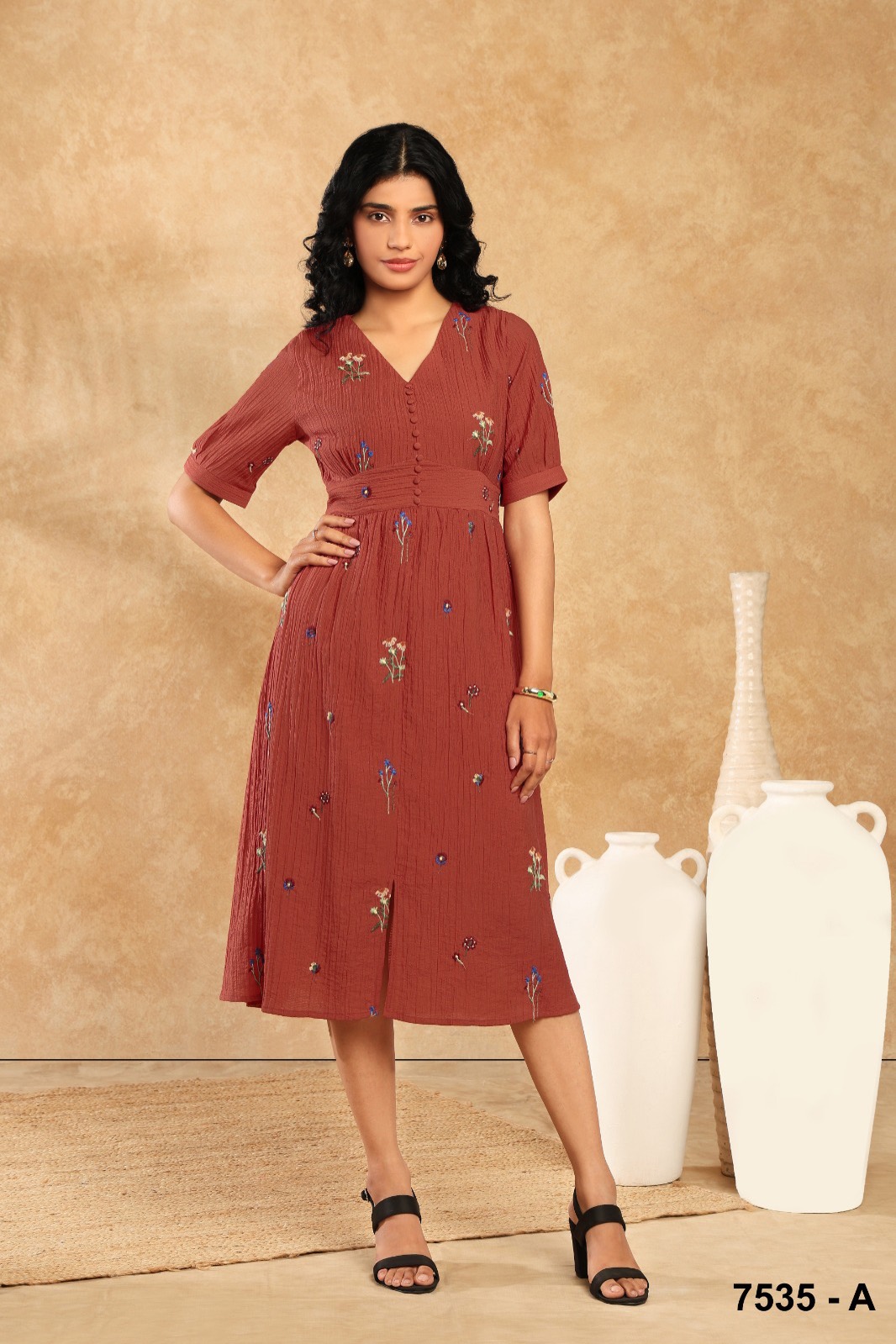
The details that make a dress practical are often invisible on the hanger. Pockets — set into the side seams or patched onto the skirt — are the most appreciated feature of any casual dress. Washable fabrics save time and money, so read the care label before falling in love. A light, breathable lining in cotton or voile prevents sheerness without adding heat. Closures should be easy to manage alone: front buttons, side zips and wrap ties are simpler than long back zips. Adjustable elements — drawstrings, tie belts, smocked panels, elasticated cuffs — accommodate the changes of a long day. And reinforced seams and well-finished hems help a much-worn dress survive the weekly wash.
06
Footwear coordination
Shoes set the pace of a casual dress. Flat leather sandals and kolhapuris are an easy match for cotton midis and maxis; white sneakers turn a shirt dress or printed day dress sporty; espadrilles and woven flats suit linen; block heels or low wedges add polish without sacrificing comfort on uneven pavements. Consider proportion, too: a midi pairs well with a shoe that shows a little of the foot, while a maxi needs a slim sole that will not catch the hem. In the monsoon, choose rubber or quick-drying sandals with good grip and keep delicate leather for drier days. A neutral shoe, or one that picks up a shade from the print, gives an easy, coordinated finish.
07
Accessories
Casual accessories should be useful first and decorative second. A roomy tote or crossbody bag in canvas, leather or woven cane carries the day; sunglasses and a lightweight scarf protect against sun and air-conditioning alike. Jewellery works best when it is simple: small gold or silver hoops, a slim watch, a few stacked bangles or a single pendant. Belts are the most powerful casual accessory — a narrow leather belt redraws the waist of a relaxed dress, while a fabric tie softens a shirt dress. Let one element lead: if the dress is busily printed, keep accessories plain; if the dress is minimal, a bold earring or a coloured bag can carry the look.
08
Casual layering
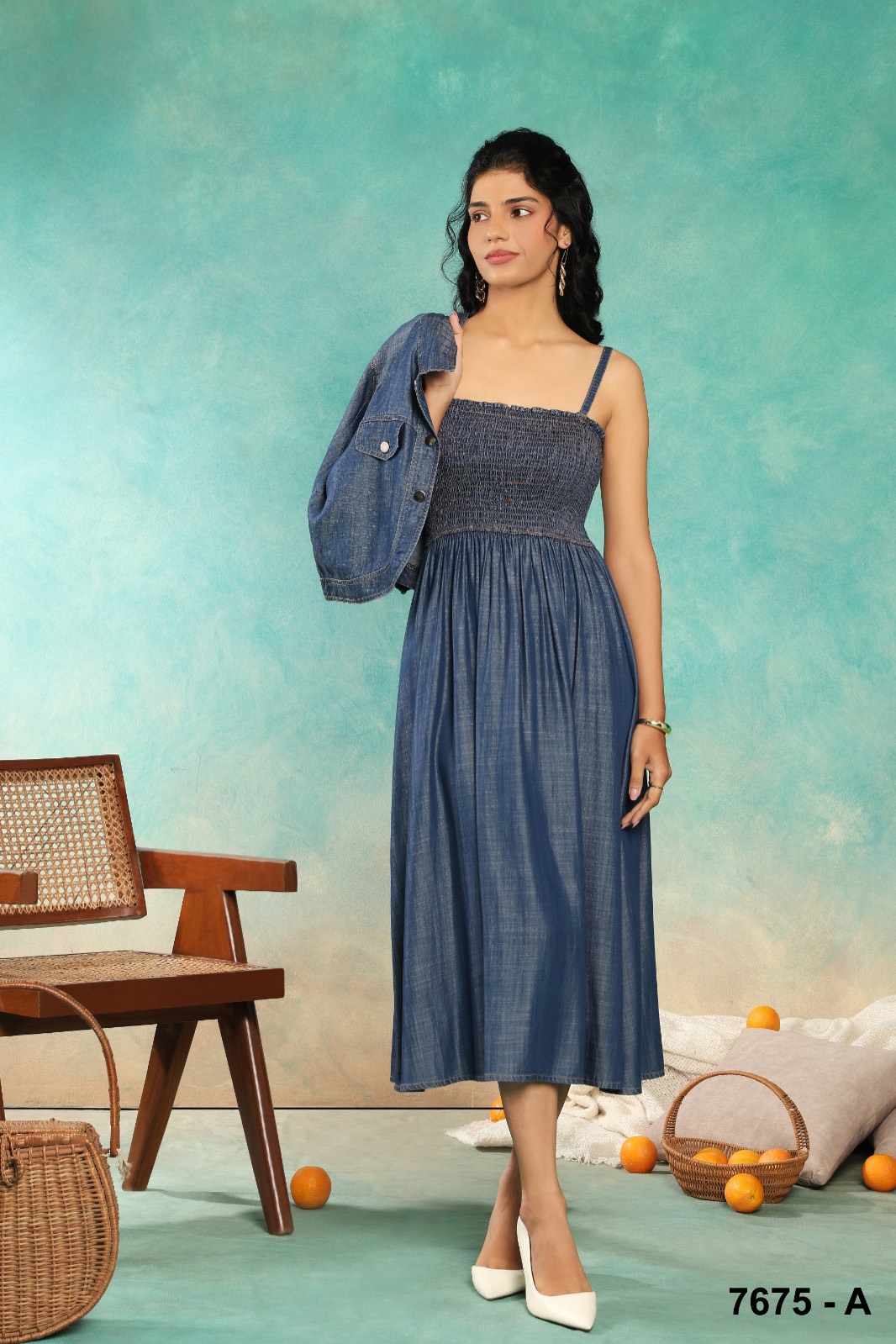
Layering keeps a casual dress working from a humid morning to an air-conditioned afternoon and a breezy evening. The denim jacket is the classic partner, adding structure and an easy, off-duty attitude to sundresses and midis — exactly as in the photograph above. Open linen or cotton shirts worn as light jackets suit sleeveless dresses; a cropped cardigan or fine knit balances a long skirt; a sleeveless dress can also sit over a fitted T-shirt for a relaxed, layered look. Keep the layer lighter than the dress or similar in weight so the outfit never feels bulky in the heat, and choose pieces that can be tied around the waist or carried when the sun returns.
09
Versatile wardrobe combinations
A small, well-chosen group of casual dresses can create a week of looks without repetition. Start with three or four base dresses — a cotton midi, a linen or shirt dress, a casual maxi and a minimal dress — in colours that work together. Add two or three layers (a denim jacket, an open shirt, a light knit), two pairs of shoes (flat sandals and sneakers or block heels) and a belt. Rotating these pieces changes the silhouette, the mood and the level of formality each day. Our journal essay on building a versatile dress wardrobe explores the approach further, and the styling guide covers necklines, lengths and colour coordination in detail.